
Reading Your Audience
Some Get It, But Who Are They?

You’ll learn far more of the human psyche by travelling the world visiting clubs, pubs, schools, businesses of all types and sizes, stock exchanges and financial institutions, community groups and prisons than you will with experimental psychology or from text books a foot thick. - Carl Yung
As a coach and trainer, I learnt very early in my career that to be, and remain effective, it’s an absolute must to continue learning. Not only to enhance my skills, but to understand my clients more effectively.
Long before I ever heard of Carl Yung, I was already travelling that path. Not only for the purpose of understand people’s psyches, but if I was to ever impact on their behaviour, I needed to understand how they took in and processed information and how each would most likely respond in given situations. And only then would I know the best way to teach, coach and mentor them.
I first learnt that some people are visual learners, while others are auditory and others, kinaesthetic, while there are those who are combinations. Beyond that, I learnt that everyone has their own unique style and preferences for learning and that their face tells us what we wanted to know. Just as the facial expressions give away their emotions in any given moment, the facial features give away their personality traits.
I hear you asking “how can facial features tell us how a person will listen, think and act?” Just the same as the muscles of the body will develop and take shape with lifting weights, so too do facial features take shape when we pull the same expressions over and over. While the facial expressions are the visual presentation of emotions, the facial features are a history of our personalities; showing how we think and behave. And as the face can pull many different expressions, there are many different facial features representing different personality traits, and the possible combination of those traits is even larger. With each trait moderating or enhancing other traits, the possibilities are very large. Recognising how a person naturally operates is made easy when you look at the interaction of the traits associated with of the features that stand out the most. And all of us are different to each other.
In the last edition, I spoke about the quantity of information a person will take in before they switch off and of the physical feature that guide us in understanding at what point that will occur. That trait was about whether the person just wants the big picture and would switch off with too much information, or whether they need to analyse a lot of information before they can make a decision.
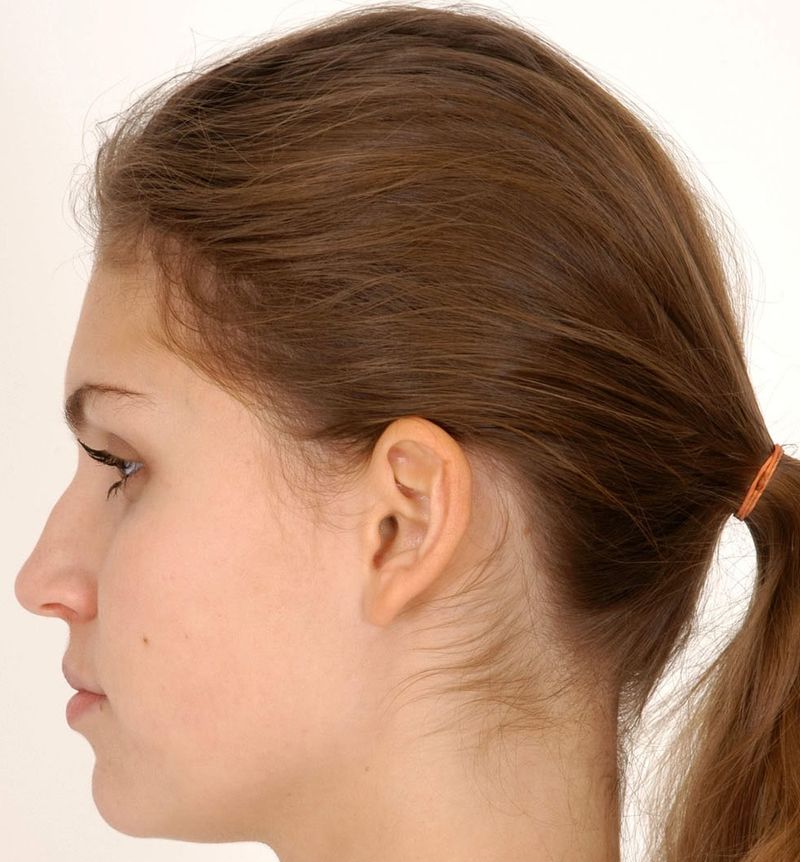
Regardless of how much information they require, how it is delivered also has an impact. Some people need information presented in a clear and structured order. Regardless of being either big picture or analytical, each point and facts needs to be given to them in a logical order, where each item builds on the preceding item and together they create a connective flow. These Sequential thinkers consciously process new ideas and challenges through a rational, logical step by step process. A trait that very much suites gymnasts, especially with parallel bar routines. This trait is indicated in the angle of the forehead. The more vertical, the more Sequential the person’s thinking process will be.
If you give them information in disjointed blocks, they will struggle to bring it together. As stress levels go up, they need the information to come slowly and very much in the right order. They generally struggle if their trainer has the opposite trait to them and when the activities move too fast and they feel rushed. Yet, they themselves make some of the best teachers, because they deliver information in the same way they want and need to receive it, and so matching everyone like them.
The opposite style of this trait, the Objective thinkers, will react quicker, pulling information together from past and present experiences. They can piece together segments quickly, reorder the information as required to get an overall understanding. They don’t need it all, for most times they can “join the dots”. You’ll recognise the Objective thinkers by the more angled back forehead. These are the warriors, fast to action.
If you have a sequential thinker and one who also has the analyst trait (see Coaching Life, March edition), they will need the information in the right order and a lot of time to analyse all of the facts as they go. If you have the opposite traits, it can test you as their coach. Don’t rush them if you want an amicable outcome. But be assured, when they get there, they have it all together and nothing will be missed.
On the other hand, if they are both an objective thinker and big picture person, you will have someone who moves fast, rushing to get to the end. They feel great to work with, but you don’t know if they got it all without you needing to test them.
Image 1, is more Sequential yet Big Picture. In teaching or coaching them, information needs to be structured, but don’t give too much information or they go into overload and switch off. Stay with the big picture and they, once they have the structure in their heads, will then ask any questions if they still need more information.
Image 2, is an Objective thinker but also Analytical. In her case, although she can pull concepts together fast, she still needs as much information as she can get. Being objective she will, just as likely, jump from item to item while asking questions to get more clarity. If you are a Sequential thinker, she could easily exhaust and frustrate you.
You can see from this, depending on your own style and how they differ from the other person, you could get it horribly wrong and lose the client altogether.
Knowing your own traits, recognising their traits and changing how you speak to match how they prefer to be spoken to, will make you a far more effective coach.
About the Author
Edit author
Alan Stevens is an International Profile and Communications Specialist. He is regularly featured on National TV, Radio and in the World’s Press, profiling the likes of our leading politicians, TV and sports stars as well as Britain’s Royalty.
He is an Amazon #1 Best Selling Author, a Coach, Trainer and has been referred to as the leading authority on reading people, globally by the UK Guardian and as ‘the mentalist meets Dr Phil’ by the Herald.