
Focus on Classroom Performance
Then his complication rates steadied. He immediately felt his performance had plateaued and the statistics supported this.

COACHING, PLATEAUS AND THE SMALL THINGS
The role of lesson observations
By Gerard Alford

Atul Gawande is a surgeon. During his first eight years he knew he was improving; he saw his complication rates steadily fall and soon he was beating the national average benchmarks.
Then his complication rates steadied. He immediately felt his performance had plateaued and the statistics supported this.
Is this what happens at 45 years of age? Is this a surgeon’s peak? Is there a finite limit to one’s improvement?
After taking some tennis lessons and instantly improving his game, he thought – I’m quite willing to pay for tennis lessons but not for surgery!
He then did something unconventional.
He approached a highly respected and retired surgeon and asked him to observe a surgical procedure. The operation went smoothly. Could the observer offer any advice?
The respected surgeon said he only observed the small things. After the operation, he discussed the way Dr. Gawande draped the patient, the position of his right elbow, the position of his feet, the lighting… the list went on.
After a 20-minute discussion, Dr. Gawande had “more to consider and work on than I’d had in the past five years.”
Yes, it had felt strange and awkward having a stranger in the operation. But with an extra set of eyes and ears, and some professional advice from a respected colleague, his complication rates have since gone down.
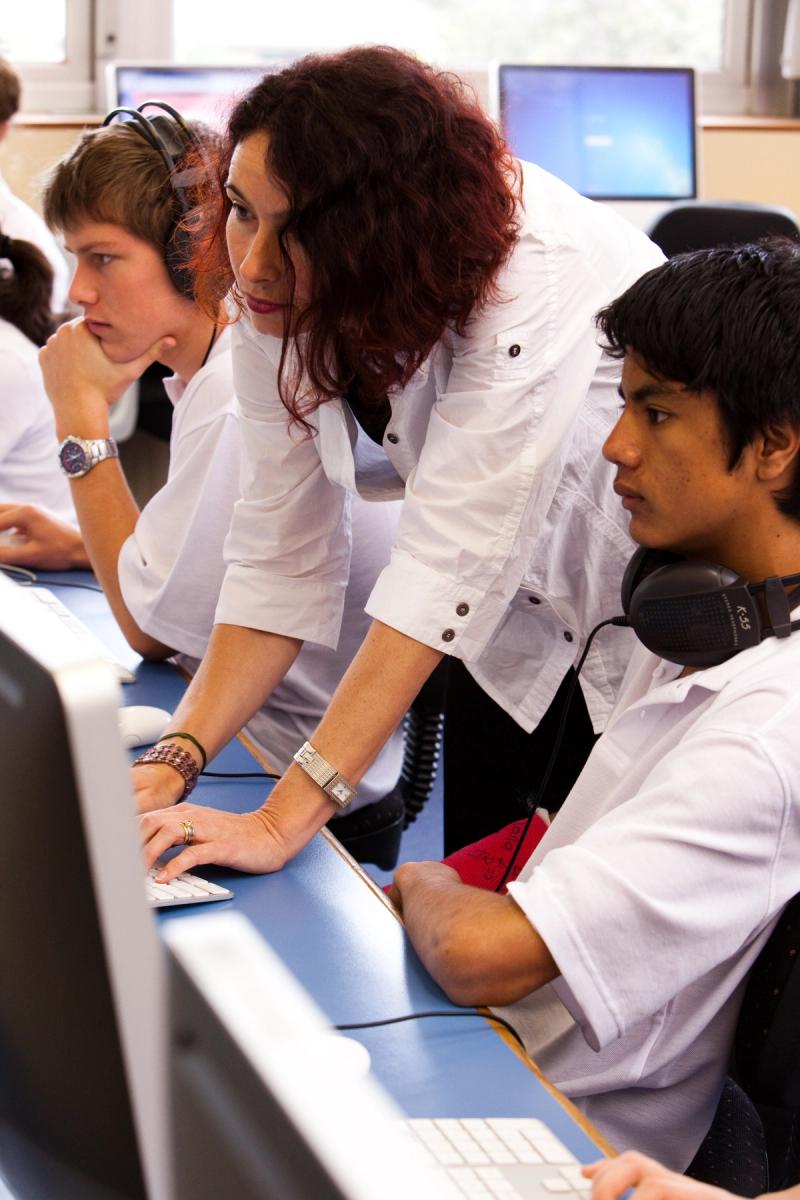
Are there parallels in teaching? Teacher Observations are in full swing across Australia with NSW mandating that every teacher must have at least two lesson observations undertaken each year.
ITC Publications have completed over 80 public workshops throughout Australia with over 1 000 school leaders attending.
ITC Publications Director, Gerard Alford, said teachers and school leaders required high-level training in lesson observations to support AITSL’s national education framework being implemented in schools across the country, “but it is important to set-up the process right and to do it for the right reasons.”
“Our slant on lesson observations is that they should be undertaken for one single purpose; professional growth.
Our feedback from the many workshops we have delivered throughout the country is that teachers feel more comfortable when it is implemented for this purpose rather than for evaluation or compliant purposes.”
There are brilliant teachers at every school so let’s provide opportunities for their colleagues to see them in action,” Alford said.
However, as with Atul Gawande, he cautioned that the majority of teachers and school leaders initially felt awkward about entering their colleagues’ classrooms.
He explained that for lesson observations to be successful, a clear set of mutually agreed guidelines must be observed from the outset.
“From our work with schools, it’s obvious that teachers appreciate a clear set of guidelines to assist them to feel more at ease with entering classrooms,” Alford said.
“Our experience tells us that observers require training to confidently perform observations of their colleagues.
For the observation process to be successful, teachers and school leaders must gain the skills to gather quantitative feedback and provide this data to the relevant teacher with the aim of improving their pedagogy.”
“We know that the research says that lesson observations is one of the most powerful influences of changing teacher practices, so its worth the time and effort to establish a good process where everyone sees it as an opportunity for professional growth and not as a threat.”
The interesting question, is whether teachers, or more specifically, teachers who feel they had ‘peaked’, feel they are actually teaching better as part of this process?
We will have to wait to find the answer
About the Author
Edit author
Gerard is an author and the Director of ITC Publications, established in 2002. He has over 20 years’ experience as a full time Secondary School teacher in a range of Independent Schools in three Australian states and the UK. He has held a number of senior positions including Head of Faculty, Director of Studies and Dean of Staff.