Child Protection and Your Responsibilities as a Coach
On Friday 11 January 2013 the Governor-General of Australia, Her Excellency Quentin Bryce established a Royal Commission into Institutional Responses to Child Sexual Abuse. The Royal Commission was se

CHILD PROTECTION YOUR ROLE AS A COACH
By Peter Downs
On Friday 11 January 2013 the Governor-General of Australia, Her Excellency Quentin Bryce established a Royal Commission into Institutional Responses to Child Sexual Abuse. The Royal Commission was set up to investigate how institutions like schools, churches, sports clubs and government organisations have responded to allegations and instances of child sexual abuse.
It is the job of the Royal Commission to uncover where systems have failed to protect children so it can make recommendations on how to improve laws, policies and practices.
The Royal Commission’s public hearing into sport took place from 4th to 13th April 2016 with the final report for Case Study 39 being released in late 2016.
The report is an important document for sport in Australia even though it is, at times, difficult and disturbing reading. It provides a stark reflection of how child safety is handled in sport, from national to local level.
While there is much to address coming out of the report the Royal Commission did, in many ways, hold sport up as exemplar of good practice.
Unlike other sectors, sport does have protections, policies and education programs in place to help keep children safe.
The Australian Sports Commission mandates Member Protection Policies for all recognised national sports organisations. There are codes of conduct templates and guidelines for coaches, parents, spectators, officials and administrators.
If you are involved in sport, even as a volunteer, in all likelihood you would come across these.
These codes and templates are important and necessary but they do little, in a practical sense, to help coaches in their day-to-day interactions with children.
So, what can a coach do and what help is available?
The Royal Commission identified and recommended one important source of help – Play by the Rules.
Play by the Rules
Play by the Rules is a national collaboration between the Australian Sports Commission, the Australian Human Rights Commission, all state and territory departments of sport and recreation and equal opportunity commissions, the Australian and New Zealand Sports Law Association, the Office of the Children’s Guardian and the Anti-Discrimination Board of NSW.
Its mandate is to support safe, fair and inclusive sport through education, resources and the provision of free information.
It started in the early 2000’s when the focus was on child protection, harassment and discrimination and complaint handling in community sport.
Over the years it has expanded into other areas that impact safety, fairness and inclusion in sport, although child protection remains a core focus area.
In collaboration with multiple partners Play by the Rules has developed a unique online education program on child protection.
Many sports have now mandated the course as a requirement for coach and official accreditation programs, even before the Royal Commission hearing.
This has resulted in around 1,000 course completions per month for the child protection course.
Child Protection online course - what you will learn?
The course will help you to understand child protection laws, how they apply to sporting organisations and volunteers, and what your responsibilities are with respect to these laws.
It contains case studies, quizzes, drag and drop exercises, video scenarios and other interactive elements to keep you engaged. On completion you can download your certificate of completion.
When you’ve successfully completed this course, you will:
Ensure that you comply with the law
Help ensure a safe environment for children at your club or organization
Contribute towards a hassle-free club
Help your club retain its members
Gain confidence to know what to do if something happens
Child protection in sport and recreation starts with setting up an environment and administrative system that will allow children (anyone under 18) to remain safe from abuse, and protected from any individual who wishes to exploit or harm them.
Child abuse can occur through actions that harm or injure a child, or an environment that does not provide protection for them.
Child abuse can be intentional (such as physical, emotional, verbal or sexual abuse) or unintentional (such as an injury caused through poorly maintained facilities and equipment).
Your role as a coach
As a coach of young people, you are in a position of power and influence. Young people will look up to you, and be guided by your actions. You will likely have the most amount of interaction with young people at your club or sporting organisation, so you will often be among the first to see or recognise a developing problem or situation.
You have a key role in any club or sporting organisation.
Your responsibilities are to:
T
reat all children respectfully, and within the child protection laws of Australia (free from any form of abuse).
R
efrain from any form of verbal abuse, or verbal communications that are harmful, spiteful or sexually suggestive.
A
ct appropriately and responsibly with children of all ages (up to 18 years).
R
aise your ‘child safe’ awareness to be able to spot any problems or situations before they escalate.
I
nform the nominated club or organisational officer if you witness or suspect any situations that may potentially lead to, or may constitute, child abuse.
B
e a positive influence, and/or voice for change, in the creation of a child safe environment at the club or sporting organisation.
M
ake sure that your intentions, your actions and your efforts ensure a child safe environment.
Some of the most valuable exercises are the video scenarios and case studies.
Here’s an example of one of the case studies.
The ‘tough coach’ case study
This case study is designed to promote discussion about child protection, and the approach that your club, its members, administrators and volunteers take towards creating a child safe environment.
The parents of two girls at a swimming club complain about the abusive way the girl’s coach yells at the team at every practice.
This coach was a female state representative and is well respected and known in the swimming community, with a reputation for being tough, but also for producing good swimmers.
The parents who complain had previously agitated to get their girls into the coach’s squad.
What would your club do?
The swimming club’s member protection officer talks to the girls, who say they ‘don’t mind’ when the coach yells at them at the end of the session.
The club informs the parents that it will not be proceeding any further with the complaint, and suggests that the girls might want to drop a grade where the coaching style will be ‘less pressured’.
Discussion points
Who is responsible for this situation? The coach? The girls? The club? Would a whole club approach make any difference?
What might have been done to avoid this situation?
How might the club have better supported the girls, their parents and the coach?
Would this happen at your club?
Do you have procedures in place that would prevent this?
The course will help you answer these, and many other, questions to help you keep children safe at your club and in your coaching programs.
The Royal Commission has highlighted the important issues of child safety in sport. They emphasise, as does Play by the Rules, that child protection is everyone’s responsibility.
As a coach you have a particularly important role to play in keeping sport safe, fair and inclusive.
One of the ways you can do that is to undertake the Child Protection online course.
To access the Play by the Rules online courses, go to www.playbytherules.net.au/online-courses
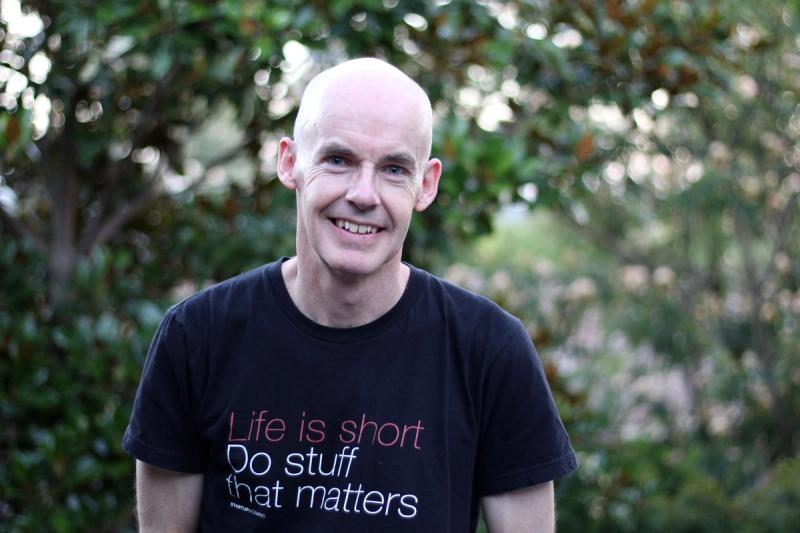
Peter Downs is National Manager of Play by the Rules. Prior to that he was Assistant Director of the Australian Sports Commission’s Integrity in Sport Unit for two years and Manager of the ASC’s Disability Sport Unit for 17 years.
In 2014 he was awarded a Churchill Fellowship to study models of best practice in inclusive sport for people with disability in Finland, the UK and US.
About the Author

Peter Downs is National Manager of Play by the Rules. Prior to that he was Assistant Director of the Australian Sports Commission’s Integrity in Sport Unit for two years and Manager of the ASC’s Disability Sport Unit for 17 years.