
Coaching is for Life
The English language is a thief. It is notorious for “stealing” or “borrowing” words from other languages – upwards of 80% of English comes from elsewhere. “Algebra” derives from Arabic; “ketchup”: Ch...

COACHING
IS FOR
LIFE
by Elena Shkrab and Paul Farkas
There is no more noble a pursuit than influencing young people for the better – and for life.
The English language is a thief. It is notorious for “stealing” or “borrowing” words from other languages – upwards of 80% of English comes from elsewhere. “Algebra” derives from Arabic; “ketchup”: Chinese and on and on.
There is only one word in English that derives from Hungarian. In the 15th century, the Hungarian village of Kocs (pronounced coach) was known for developing large horse-drawn carriages used to transport society’s upper classes. A wagon from Kocs, would move the elite from one location to another, quickly and in comfort.
The word “coach” entered English as a metaphor derived from the field of education - not athletics. In 18th century England, students of the upper classes used tutors to prepare for their exams.
The slang reference for a tutor became a “coach” - because they would carry a student from a position of less knowledge to more knowledge, just as a “Kocs” would move them from point A to B.
The term came to include any activity aimed at achieving learning and growth in another person, based on a genuine desire to see that person develop.
I have been a pro table tennis player and coach for over 25 years. I am also an educator, an engineer and an entrepreneur. But, in my view, I am first and foremost a coach. Why? Because I was forever influenced by my parents as well as two coaches who changed my life.

I was first introduced to the world of athletics as a young girl in my hometown of Odessa, Ukraine. I was eight years old when a table tennis coach named Leonid Greenshteine came to my school. His mission was to introduce the game of table tennis to the youth within our city.
As an eight-year old watching the other kids play, I wanted more than anything to participate but he told me I wasn’t ready.
He gave me my first assignment. “Bounce the ball off your racket twenty times in a row and then you can join in”.
This was a challenge – and I have never shied away from challenges. I went home, practiced, came back the next day, showed off my new skill and started to play. And play and play and play.
Under his tutelage, I began to thrive and not just in table tennis. As well as the skills of playing the game, he also taught the discipline, determination and toughness necessary to succeed in both table tennis and life. And I developed to where I became one of only eight children selected in my city to train at an elite level. At this point I was introduced to my second coach.
Felix Osetinsky was a genius and legend who developed some of the greatest players of my era. On our first meeting with our group of eight, he told us: “I will develop your forehand and your backhand, but more importantly I will develop you – both physically and mentally”.
We worked hard – practicing each day, three hours per day during the school year and nine hours a day in the summers, for ten years.
We ran, jumped and built our speed, endurance and overall fitness. We developed our games and our mental toughness.
What did mental toughness involve? It was the desire to win, not just in competition with others, but within ourselves.
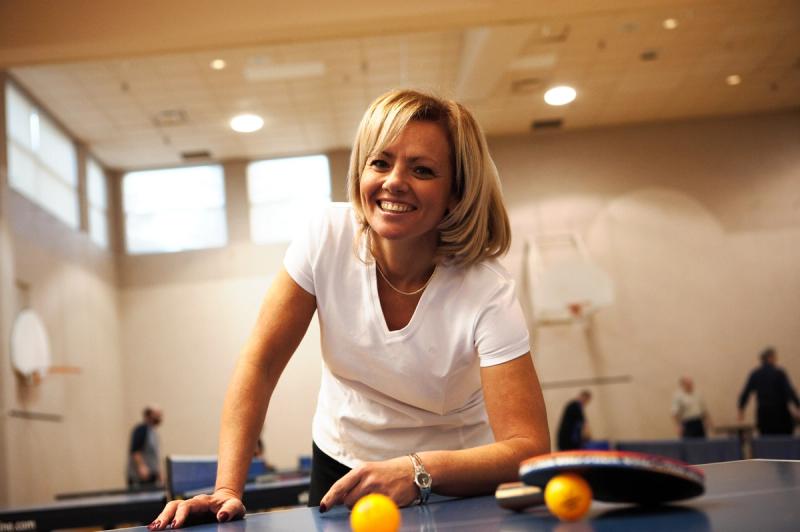
Yes, we had to be better than the next player, but we also had to be better than ourselves - every day compared to the day before - in everything we did. A new personal best each day was my goal.
Coach Osetinsky taught us that winning in games started with winning in practice.
You didn’t develop the attitude to win in the Championships themselves; that was too late.
Muhammad Ali once said: “If you can do it, it’s not bragging”.
I remember the sign over the door to the room that separated the competition tables (accessible only to the best of the best) from the practice tables available to everyone else: “How do you prove yourself? Results.”.
I had set myself two goals by the time I was 16: 1) become a member of the Ukrainian National Junior team and win at that level and 2) become a Master of Sport in the USSR – a designation awarded for life to those who have met the requirements at official competitions. I succeeded in both.
The goal setting, hard work, mental toughness and focus on results taught to me by my parents and coaches served me not just in table tennis.
I completed two degrees - in Mechanical Engineering at the Polytechnic National University and Patent law in Odessa, began work as a professional engineer and subsequently moved with my husband to Israel.
While there, I resumed my table tennis career as both a pro player and a coach and earned my third degree as a Physical Education teacher. I also founded eight table tennis clubs throughout my adopted city. While I was happy, life in Israel was not easy. When our daughter was a teenager, a bomb rocked through Israel. We decided to leave for Canada.
Life as an immigrant in a new country is not always easy. I have done it twice. And I have never given up my dream of bringing table tennis to the young.
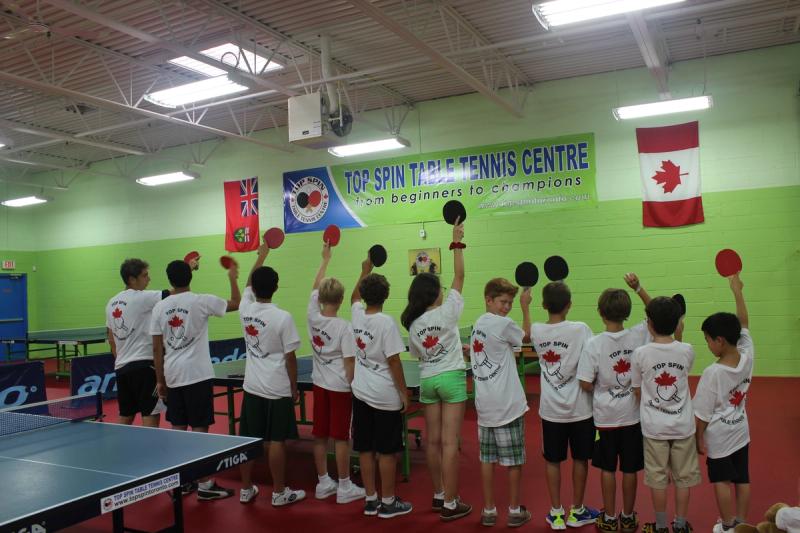
Even before I found my first full time job in Canada, first as a teacher and later as a program manager helping other immigrants to adapt to Canadian life, I opened my own Table Tennis club which is still my current focus. I continue to coach kids hoping to impact them the same way that I was in influenced in my youth. I believe that I would not have achieved my successes in life without the lessons instilled in me many years earlier by my coaches.
Elena Shkrab
Unfortunately, coaching is often associated with the world of team sports. In that world, the coach is responsible to select a roster, develop and communicate a game strategy, bark orders at the players and argue with officials.
The genuine desire to see others develop is not the primary focus associated with athletic team coaches; their focus is winning. Development of others is secondary.
The original meaning of “coach” derives from the world of education. My life was forever influenced by my parents and two coaches who had a genuine desire to see me develop.
Whatever the endeavor – be it table tennis, other sports, music, art, or any activity – in my view, coaches who work in the area should be first and foremost educators.
Founder of TOP SPIN Table Tennis Centre of Toronto, pro table tennis player and coach with over 25 years of international coaching experience. National Champion and Team player in both Ukraine and Israel, and finalist of European Championships.
Elena was a coach of the Israeli National League Team and several champions as well as the Ontario Provincial Champion in Canada. Awarded Master of Sport title of former USSR.
About the Author
Edit author
While there, I resumed my table tennis career as both a pro player and a coach and earned my third degree as a Physical Education teacher. I also founded eight table tennis clubs throughout my adopted city. While I was happy, life in Israel was not easy. When our daughter was a teenager, a bomb rocked through Israel. We decided to leave for Canada.