
Beware Neuro Bunk
Recently released, Pulitzer Prize nominated and best-selling book Stealing Fire reports how Navy SEALS, Google and Silicon Valley are combining neuropsychology, psychology and technology in pursuit of...

BEWARE
NEURO BUNK
By Rob Gronbeck
A growing interest in the role of brain function in peak performance is reaching critical mass. In late 2016, the Australian Institute of Sport (AIS) hosted The Performing Brain seminar. Head of Performance Psychology Kirsten Peterson said, “The brain maybe the next frontier… in what we understand… where sport is going to be heading and what we can do to maximise performance…” and concluded with, “I hope we’re all on the same page in wanting to learn more about that.”
Recently released, Pulitzer Prize nominated and best-selling book Stealing Fire reports how Navy SEALS, Google and Silicon Valley are combining neuropsychology, psychology and technology in pursuit of flow and group flow to accelerate learning and performance.
Two series of Todd Sampson’s Redesign My Brain have beautifully illustrated practical applications of ‘brain function training’ to accomplish seemingly impossible tasks for an untrained person.
Why should coaches get on the ‘brain train’ and which track lead to which destination?
Do you need a PhD in Neuroscience, a Masters in Sport Psychology or electrical bioengineering to navigate this brave new world?
In our rush to gain an edge over our competition, do we simply trust crowd funded neuro-tech start-ups who promise to deliver us enhanced performance through brain stimulation, neurofeedback or some other method?
Or should we wait until academics have mounds of gold-standard peer-reviewed evidence to ensure we are making critical evidence based decisions?
It’s a delicious, tantalising and exciting dilemma which, as a practicing performance psychology coach, I have wrestled with these past three years.
This article reflects on that journey and the key criteria I used to decide what is relevant and what is probably “neuro-bunk.”
Despite the consciousness raising efforts of academics, authors and documentary maker’s, certain challenges in psychology remain.
Quantifying effectiveness, avoiding psychology stigma associated with Freud, talking therapy, electric shock treatment and only being considering when something is going wrong! Struggling with those factors in my own practice, I decided to be the first in Australia to invest in Neurotracker, a 3D multiple object tracking program, which was about as far from the image of traditional psychology as could be.
It was performance driven, used 3D and 80-inch projection screens, integrating physical activities with the psychological.
Since February 2014, Neurotracker has not failed to elicit a “WOW, that’s cool!” response from coaches and athletes. Try getting that with traditional sport psychology!
However, I had to be true to my scientist-practitioner roots in psychology and serve my clients from an evidence base. Thus, I was encouraged when Visual Tracking Speed (VTS) showed a credible research base at University of Montreal and it appear not just lights and whistles like many online training ‘brain training’ programs. VTS had been shown to differ according to performance ability, fitness, age, mTBI and ADHD.
It was also featured in peer-reviewed Nature and the Journal of Clinical Sport Psychology.
Further, changes in frontal and visual brain regions indicative of heightened focus and concentration were found after 1 hour of Neurotracker training… and a very far transfer study found improved passing accuracy in soccer from 1 ¾ hours of training (Romeas & Faubert, 2016). With the research checklist satisfied, I went ALL IN.
From a professional coach perspective, I turned to Matt Elliott, Director of Strong Minds Australia and former NRL head coach, who also presented at the AIS Performing Brain seminar.
His sage advice to practitioners of brain training in the high performing space is,
“No matter what… programs must be (1) engaging, (2) effective and (3) efficient.”
With Neurotracker, I could gain and maintain a client’s attention, make a noticeable difference to their VTS and brain function, and with 3 – 4 training sessions taking only 18 – 24 minutes per week, it took very little time from “core sporting” tasks.
While Neurotracker ticked all those boxes, the core aspects of performance psychology are cognitive and affective.
As a cognitive-perceptual task, Neurotracker did not and could not claim to impact emotions, although often an athlete’s propensity for frustration, fixed mindset or negative self-talk emerges which a performance coach then can get to work exploring.
Also, while the program suited dynamic action and team based sports, it didn’t appear to be effective for static sports such as golf, baseball pitching or cricket. Thus, began my next search to fill that void in my practice.
As Kotler and Wheal describe in Stealing Fire and Flow: Rise of Superman, altered states of flow are explained by ‘transient hypofrontality’ with a reduction in activity of the left-frontal lobes.
Neurofeedback measures that brain wave activity, however medical grade devices price from $3,000 – $10,000.
Having already gone ‘all in’ with the Neurotracker (roughly $10K), I struggled.
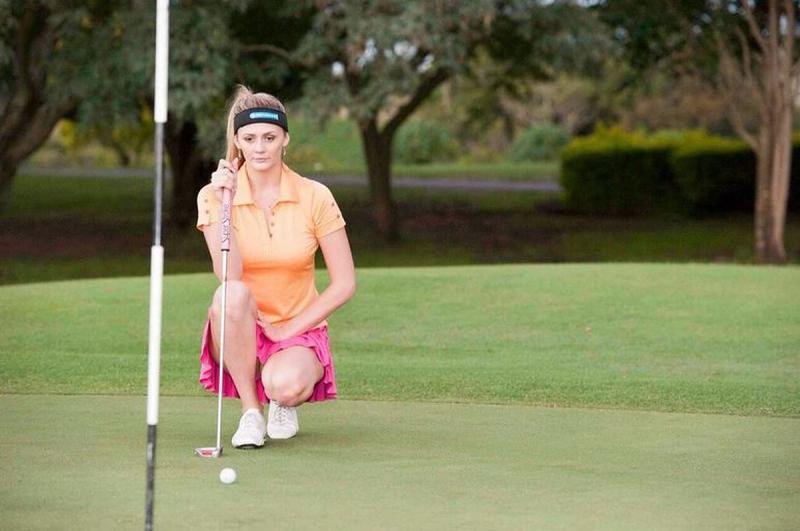
I wanted something portable, needed it under $1,000, with no ongoing subscriptions and which provided a valid measurement.
After researching the VERSUS, Emotiv EEG and Muse headsets (both quality equipment), I decided Focusband best met my criteria, although it’s developers used the term ‘mushin’ or “mind of no mind” instead of flow. Athletes learn in real-time when they are getting into/out of flow and getting out of their own way during a golf swing, conversion kick or tennis serve via visual, auditory and tactile feedback.
Essentially, Focusband founders Graham and Henry Boulton are measuring a person’s ability to perform mindfully.
Further, they guide clients to enter mushin by applying awareness of breath, body sensations and practicing acceptance, which are all pillars of a best-practice mindfulness approach.
A bonus of this technology is like Neurotracker’s VTS measure, mushin scores vary due to changes in an athlete’s sleep, nutrition, workload, fatigue and social stressors.
This aligns with brain-based models of workload management, yet unlike morning wellness surveys, these measures are almost unfudgeable.
So, I’ve now got two performance psychology training technologies which measure and train different regions of the brain according to the different sporting demands and are sensitive to fatigue, mood, stress and workload. Due to their novelty, they are naturally engaging, effectively elicit changes in the brain and subsequently performance and take less than half an hour to apply.
However, performance required more than just our brain and that why we introduced to the final piece of technology.
Todd Sampson showed the world how emotional intelligence training with Sue Langley and biofeedback with AIS Senior Recovery Physiologist, Shona Halson, allowed him to perform death defying stunts.
Hooked up to multiple sensors and using focusing and breathing techniques, Todd gradually increased his emotional coherence, a measure of heart rate variability (HRV) which indicates cardiovascular resilience.
Wheal and Kotler also reported how HRV profiles of US submariners and Fortune 500 candidates were measured and accurately predicted who would gel with the team and who would zone out… and it was trainable! I realised I was doing my client’s a disservice not providing them a valid HRV training option.
Thankfully, Thought Technology, a leader in the biofeedback and neurofeedback field for decades, had just launched their eVu-TPS (triple processing sensor) in late 2016.
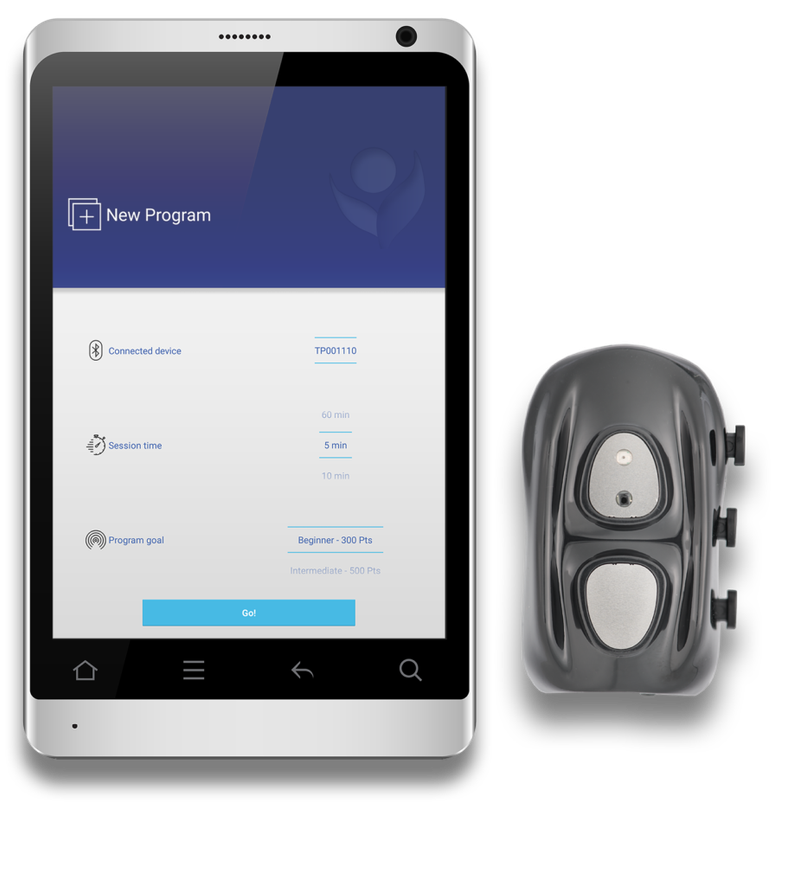
It was portable, connected via Bluetooth, required no added subscriptions, was under $1,000 and measured two other stress indicators: skin conductance and skin temperature.
Like the Neurotracker and Focusband, eVu-TPS scores vary depending on variations in wellness.
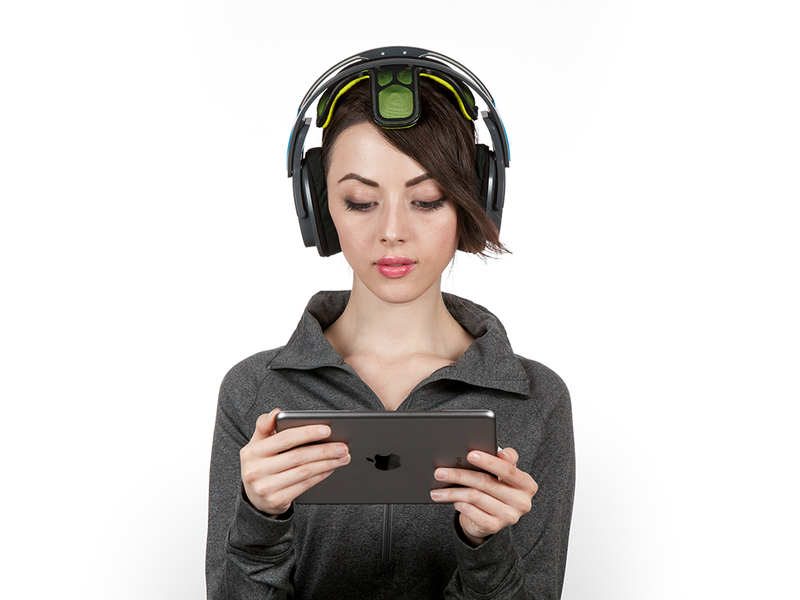
Generally though, TPS scores have an upward trend as, like Todd did, athletes and coaches learn to enter their rest and digest, contentment, clarity and acceptance states of mind-body more rapidly and remain there longer.
A limitation of the device is that it must be stationary, so it is ideally suited for sports where breaks in play occur, although using the device for regular monitoring of a person’s ability to switch off intentionally would be a useful metric.
Recently HRV biofeedback has shown promise in recovering from concussions. This will remain a valid tool for the coach, athlete and practitioner to keep abreast of further research.
More neuro-technologies are emerging in this growing marketplace and if I had unlimited funds, I’d probably purchase and try them all out.
However, like Dr Mike Martin, Head of Performance Psychology at NSWIS, said of his purchase of Neurotracker and VERSUS EEG, “Looking back I’d probably get one piece of tech and master that…. Otherwise it gets overwhelming. Each tech goes deep.”
I have successfully combined all three technologies to simultaneously train visual attention while maintaining a flow brain state and a coherent HRV.
I believe this represents the ultimate state for athletes and coaches to practice getting into: switched on, mindful and resilient.
Neuro-technologies are now capable of measuring and training cognitive and affective drivers of peak performance and provides a range of decision making criteria to use when sifting through all the “neuro-bunk” out there.
The more coaches using, benefiting from and buying into the use of this performance psychology technology, the better our coaches will perform and the more our athletes, clients and fellow coaches will be likely to follow our lead.
After all, we are coaches and therefore are really in the leadership game, aren’t we?
Rob Gronbeck works with high performing, ambitious, and goal-oriented athletes at the intersection of coaching, neuroscience and technology to improve sports performance.
Rob was the first trainer in Australia to adopt Neurotracker, a 3D brain changing performance technology and after facilitating 5282 sessions for clients such as Basketball Australia, Australian Kendo, Northern Pride, FNQ Heat, Cairns Hockey, Cairns Volleyball, and multiple individual athletes, is one of the leaders in perceptual-cognitive training in the world.
Basing his work on measurable brain-based metrics, Rob assesses, enhances, and monitors his athlete’s brain function to provide an area of greatest competitive advantage… the human brain. He has presented his research at national and state psychology conferences, received an academic medal from James Cook University, and writes a newspaper column ‘The Mental Edge.’ Rob is dedicated to accelerating the development of driven and committed athletes by tailoring his potent mix of brain training technologies to their individual sport’s demands.
About the Author
Edit author
Rob Gronbeck is an Australian performance psychology coach, researcher, and author who founded The Brain Room in Cairns, Queensland, applying evidence-based cognitive and neuroscience methods to elite sport performance. He holds a Bachelor of Psychology (Hons) from James Cook University, where he received an academic medal, and has presented research at national and state psychology conferences. Gronbeck is known for his scientist-practitioner approach, critically evaluating neuroscience claims against peer-reviewed evidence before applying them in coaching contexts.